Solve the complexity of organizing courier services
The Pickup & Delivery Routing API automatically assigns drivers to stops, to the right route sequences, routes that hold up against real-world constraints and last-minute change.















More stops per driver, fewer missed pickups.
Combine pickups and deliveries into dense, efficient routes and protect every committed time window. Our Pickup & Delivery Routing API improves stop density, on-time performance, and driver utilization, and it re-optimizes the moment a new job or disruption comes in.
Made for the messy reality of courier ops
On-demand and booked jobs, mixed parcels, a different SLA per client, a driver pool that flexes by the hour. Embed an API that handles all of it.
A brittle in-house routing system
Replace hard-coded rules and spreadsheets with an engine that keeps scaling as you grow.
On-demand and booked jobs in one plan
Optimize same-day, scheduled, and recurring work together, not in separate silos.
A different SLA for every client
Honor each client's promised windows and priorities.
Daily disruptions
Re-plan in real time when jobs, no-shows, or traffic change, while keeping dispatch in control.
Results on the ground
Outcomes you can expect after integrating the Pickup & Delivery Routing API.
Jobs per driver
Cost per job
SLA adherence
To re-route in real time
One engine, every courier constraint
Reactive job handling
Instantly reoptimize schedules when emergencies or last-minute requests come in without breaking existing plans.
Geofencing & area coverage
Keep your mobile workforce working within defined zones to reduce travel and maximize local efficiency.
Fairness & workload balance
Distribute work evenly, respect shift limits, and reduce overtime to protect your workforce.
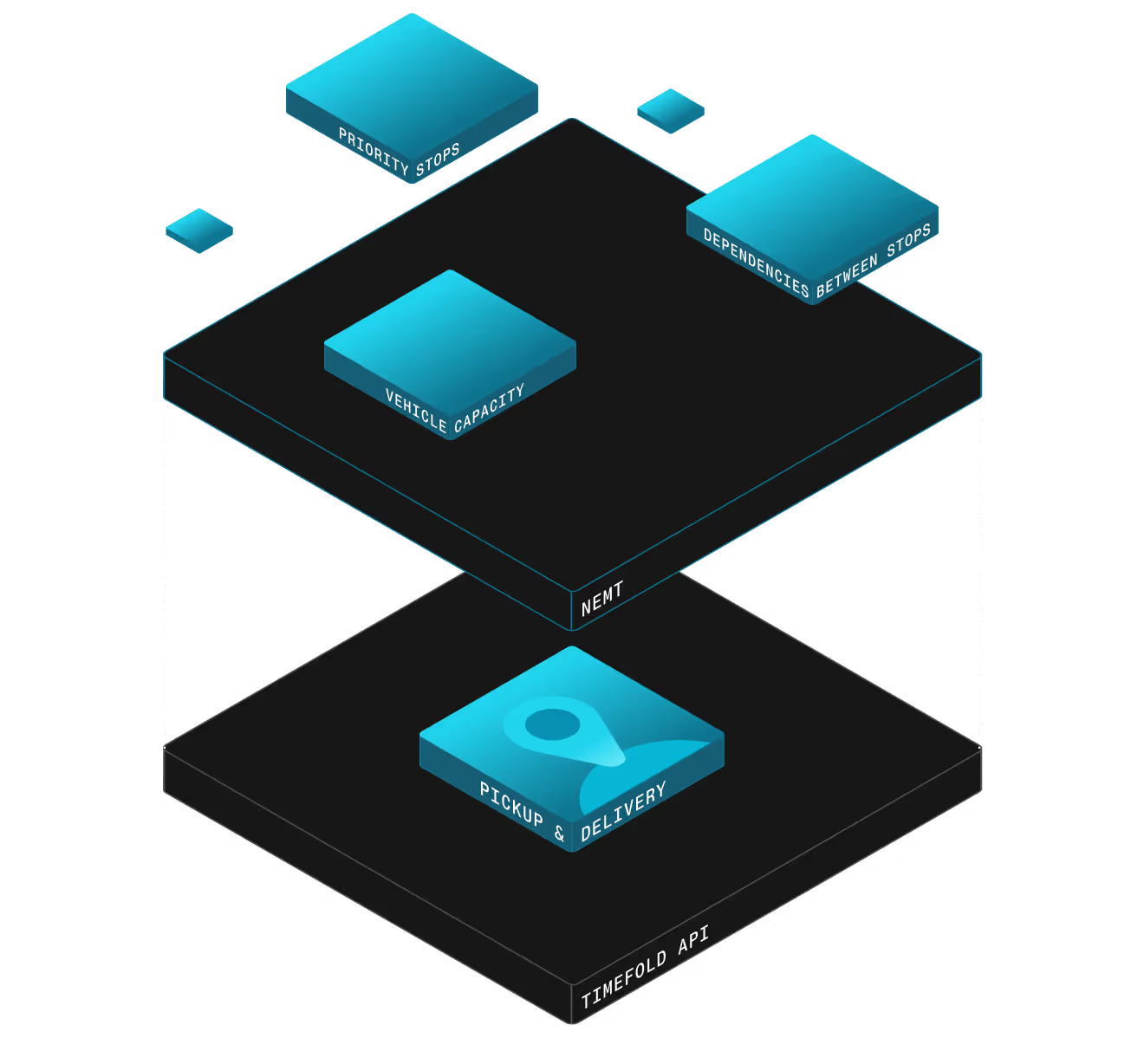
Vehicle capacity
Balance each driver's load against vehicle capacity.
Job pooling
Multiple pickups and deliveries can share a single route, letting one driver handle several jobs in the same trip.
Priority stops
Mark jobs as mandatory or optional, and the solver always serves your highest-priority stops first when not everything fits.

When scheduling works, everything works.
Less waste. More control. Teams that trust the plan.